

Hydrogen: Is It the Future of Energy or Just Part of the Solution?
Hydrogen has been described as everything from the fuel of the future to a critical piece of the global energy transition.
Canada is investing in hydrogen production, infrastructure and research, while industries around the world are exploring how hydrogen could reduce emissions in sectors that are difficult to electrify.
But where does hydrogen actually fit into the future of energy?
The answer is more nuanced than simply replacing today’s fuels with hydrogen.
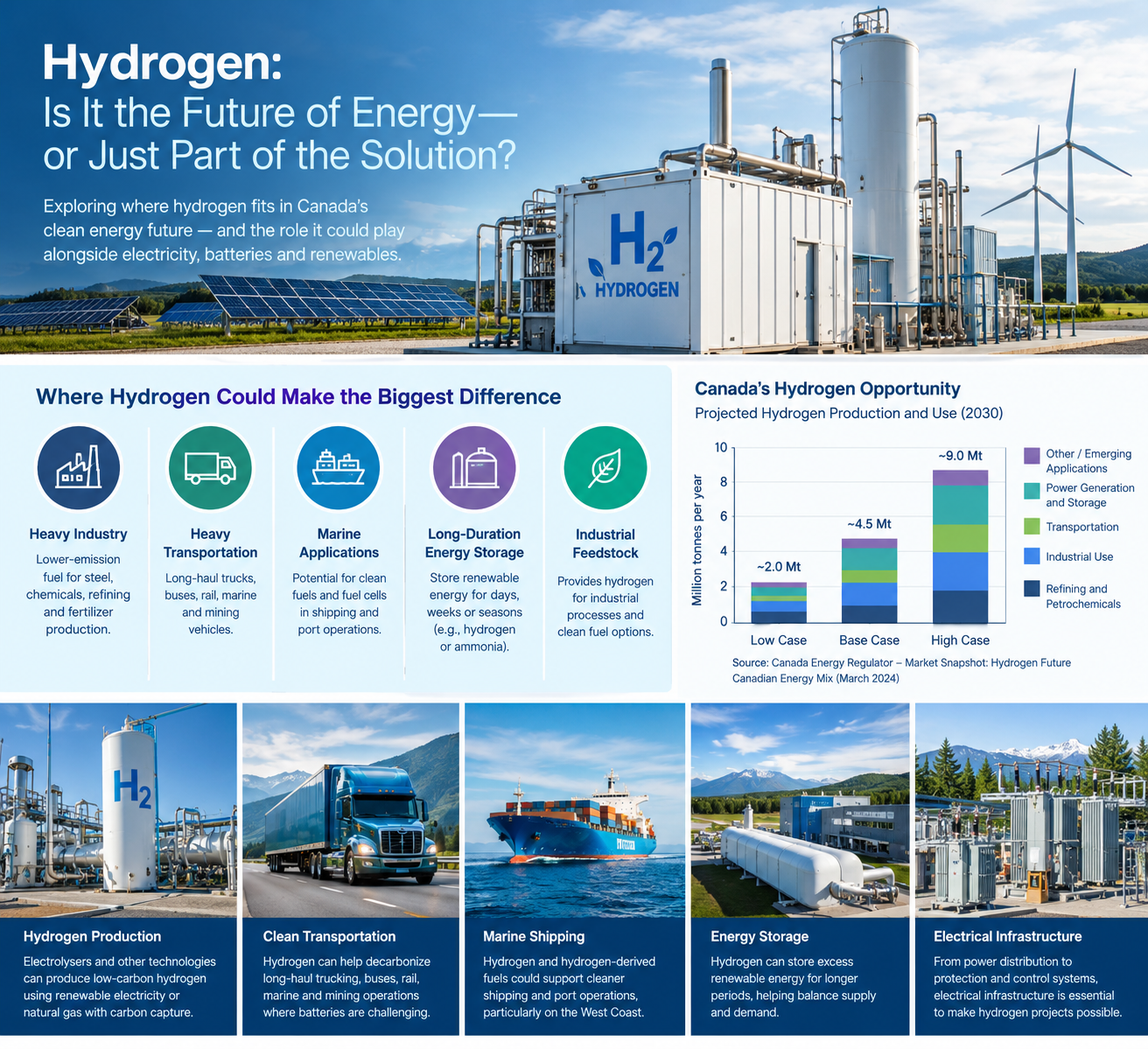
Hydrogen is unlikely to replace electricity across the board. Instead, its greatest potential may be in applications where direct electrification is difficult, expensive or technically challenging—including heavy industry, long-distance transportation, marine applications, fertilizer production and certain forms of long-duration energy storage.
For Canada, and particularly Western Canada, hydrogen could become an important part of a broader energy system that includes electricity, renewable generation, battery storage and traditional energy resources.
What Is Hydrogen Energy?
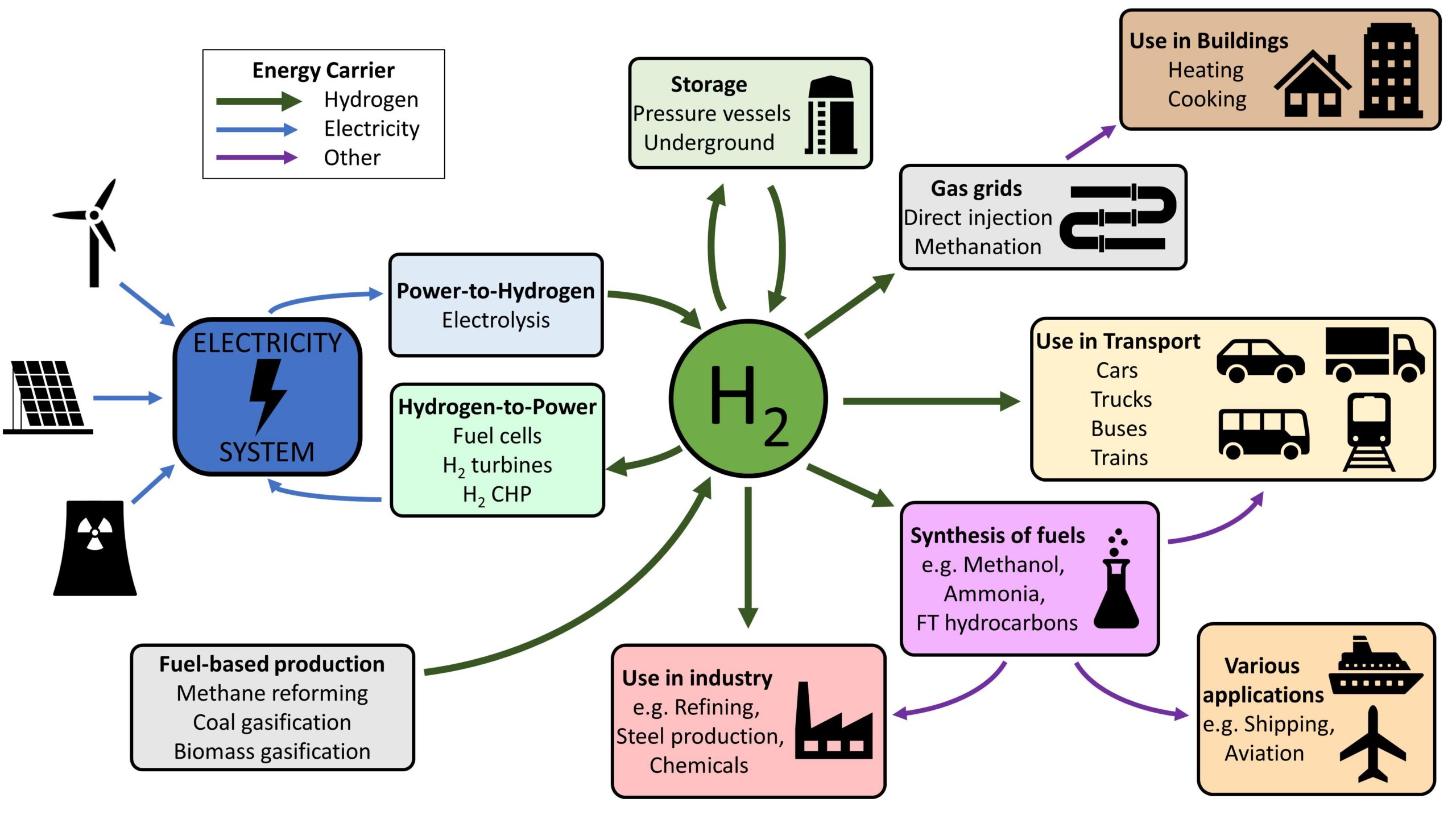
Hydrogen is not an energy source in the same way that sunlight, wind or natural gas are. It is better understood as an energy carrier.
Hydrogen can be produced using different processes and energy sources.
For example, green hydrogen is produced through electrolysis, using electricity to split water into hydrogen and oxygen. When the electricity comes from renewable or other low-carbon sources, hydrogen production can have relatively low associated emissions.
Other production pathways include hydrogen produced from natural gas, with carbon capture and storage potentially used to reduce associated emissions.
This distinction is important because the environmental benefits of hydrogen depend heavily on how it is produced.
Why Is Hydrogen Getting So Much Attention?
Hydrogen can potentially do something that batteries and direct electrification cannot always do economically or practically: store and transport large quantities of energy for applications that require high energy density or longer operating periods.
Consider heavy transportation.
A passenger vehicle can often be powered effectively by a battery because it can recharge regularly and has relatively manageable energy requirements.
A long-haul truck, ship or other heavy-duty vehicle may have very different requirements. Carrying a very large battery can add significant weight, while long charging times may create operational challenges.
Hydrogen offers another potential pathway.
Fuel-cell vehicles can convert hydrogen into electricity onboard, producing water as the primary direct byproduct. Hydrogen can also potentially be used in modified internal combustion engines and industrial processes.
This makes hydrogen particularly interesting for sectors where direct electrification presents technical or economic challenges.
Where Could Hydrogen Make the Biggest Difference?
Heavy Industry
Industrial processes are one of the areas where hydrogen could have some of its greatest potential.
Industries such as steel, chemicals, refining and fertilizer production require large quantities of energy and, in some cases, hydrogen itself as an industrial input.
Hydrogen could potentially replace hydrogen currently produced using more carbon-intensive methods or provide a lower-emission alternative for certain high-temperature industrial processes.
Canada’s federal Clean Hydrogen Strategy identifies industrial applications as an important part of the country’s hydrogen opportunity.
Heavy Transportation
Hydrogen is also being explored for heavy-duty transportation.
Potential applications include:
- Long-haul trucking
- Buses
- Rail
- Marine transportation
- Port equipment
- Mining vehicles
These applications have something in common: they can require substantial amounts of energy and may operate for long periods without convenient opportunities to recharge.
Hydrogen could provide another option where battery-electric systems are difficult to deploy.
Marine Applications
Hydrogen and hydrogen-derived fuels are also being explored for shipping.
British Columbia is particularly interesting in this area because of its extensive coastline, major ports and significant industrial and marine activity.
Hydrogen could potentially be used directly in fuel cells or converted into other fuels, such as ammonia or methanol, for certain marine applications.
However, these technologies remain at varying stages of development, and infrastructure—including production, storage, transportation and refuelling—will be necessary before widespread adoption can occur.
Long-Duration Energy Storage
This is where hydrogen becomes particularly interesting when compared with batteries.
Batteries are highly effective for many short-duration storage applications, especially where electricity needs to be stored and discharged over hours.
Hydrogen could potentially provide a solution for storing energy over much longer periods.
Excess electricity from renewable generation could be used to produce hydrogen through electrolysis. That hydrogen could then be stored and converted back into electricity or used as a fuel or industrial feedstock when required.
The process involves energy losses, meaning hydrogen is not necessarily the most efficient option for everyday electricity storage.
But for long-duration or seasonal energy storage, efficiency is only one consideration.
The ability to store large quantities of energy for extended periods could make hydrogen valuable in applications where conventional battery storage becomes impractical.
Canada’s Hydrogen Opportunity
Canada has several characteristics that could support the development of a hydrogen industry.
The country has significant renewable energy resources, natural gas resources, industrial expertise, existing energy infrastructure and access to international markets.
The federal government released its Canada’s Clean Hydrogen Strategy in 2020, outlining a long-term framework for developing hydrogen production and applications across the country. Since then, hydrogen projects have continued to develop across Canada, although the industry is still at an early stage compared with established energy markets.
The Canadian Energy Regulator has identified hydrogen as an emerging part of Canada’s energy system, with potential applications ranging from industrial processes and transportation to electricity generation and energy storage.
Hydrogen in Western Canada
Western Canada has several characteristics that could make it an important region for hydrogen development.
Alberta has significant natural gas resources, industrial expertise, geological formations that may support carbon capture and storage, and growing renewable electricity generation.
These characteristics create multiple potential pathways for hydrogen production.
British Columbia is also home to hydrogen-related initiatives focused on transportation and industrial applications. The province’s hydrogen strategy identifies opportunities in sectors including transportation, industry and exports.
The Challenge: Hydrogen Requires Infrastructure
One of the biggest challenges facing hydrogen is that producing the fuel is only the beginning.
A functioning hydrogen economy requires an entire infrastructure system.
That can include:
- Hydrogen production facilities
- Electrolysers
- Compressors
- Storage systems
- Pipelines or transportation infrastructure
- Refuelling stations
- Fuel cells
- Industrial processing equipment
- Electrical infrastructure
- Monitoring and control systems
That means hydrogen development can actually increase demand for electrical infrastructure.
Transformers, switchgear, protection systems, power distribution equipment and controls can all become important components of hydrogen production facilities.
This creates an interesting connection between two areas of the energy transition that are often discussed separately: hydrogen and electrification.
Hydrogen vs. Batteries
It is tempting to ask whether hydrogen will eventually replace batteries.
A more useful question is where each technology makes the most sense.
Batteries are generally well suited to:
- Short-duration energy storage
- Passenger vehicles
- Backup power
- Peak shaving
- Solar-plus-storage systems
- Fast-response grid services
Hydrogen may be better suited to:
- Certain heavy transportation applications
- Industrial processes
- High-temperature applications
- Hydrogen-dependent manufacturing
- Long-duration or seasonal energy storage
- Applications where batteries become too heavy or impractical
The two technologies therefore don’t necessarily need to compete.
They can become complementary components of a broader energy system.
What Does the Future Hold?
Hydrogen has significant potential, but its development will depend on economics, infrastructure, technology, regulation and the availability of low-carbon energy.
It also faces challenges.
Producing, compressing, transporting and converting hydrogen requires energy at every stage. Building the necessary infrastructure can be expensive, and hydrogen must compete with increasingly efficient battery technologies and direct electrification.
As a result, the future energy system is unlikely to be powered by one technology alone.
Instead, Canada may see a combination of electricity, batteries, solar, wind, hydroelectricity, hydrogen and other energy technologies, each used where its particular characteristics provide the greatest practical value.
Building the Electrical Infrastructure Behind Hydrogen
For AWAL, one of the most interesting aspects of the hydrogen industry is not simply the fuel itself—it’s the electrical infrastructure required to produce and integrate it.
Green hydrogen production, for example, requires significant electrical power to operate electrolysers. Connecting these facilities to the grid requires carefully designed power distribution, transformation, protection and control systems.
As hydrogen projects develop across Western Canada, electrical infrastructure will remain an essential part of making those projects possible.
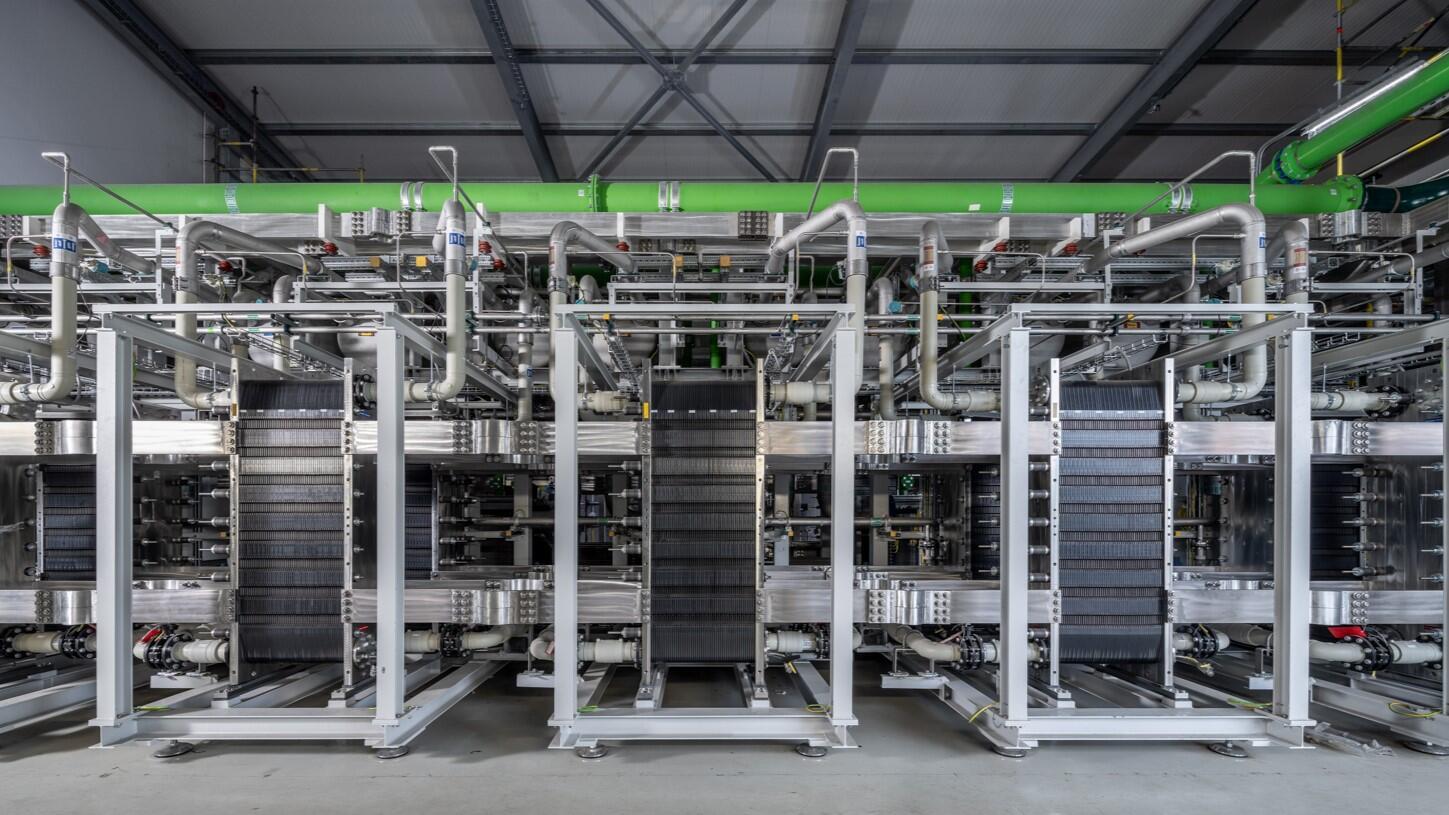
At Arbutus West Agency Ltd., we work with engineers, contractors, manufacturers and end users to support the electrical infrastructure behind Canada’s evolving energy landscape.
From medium-voltage switchgear and dry-type transformers to protection, control and power distribution equipment, AWAL helps connect proven electrical technologies with the changing requirements of industrial and energy projects across Western Canada.
Hydrogen may not be the answer to every energy challenge. But as Canada looks for practical ways to decarbonize difficult-to-electrify sectors, improve energy security and develop new forms of energy storage and transportation, hydrogen could become an important part of the solution. The real opportunity may not be choosing hydrogen or electricity.It may be understanding where hydrogen and electricity can work together to build a more flexible and resilient energy system for the future.