

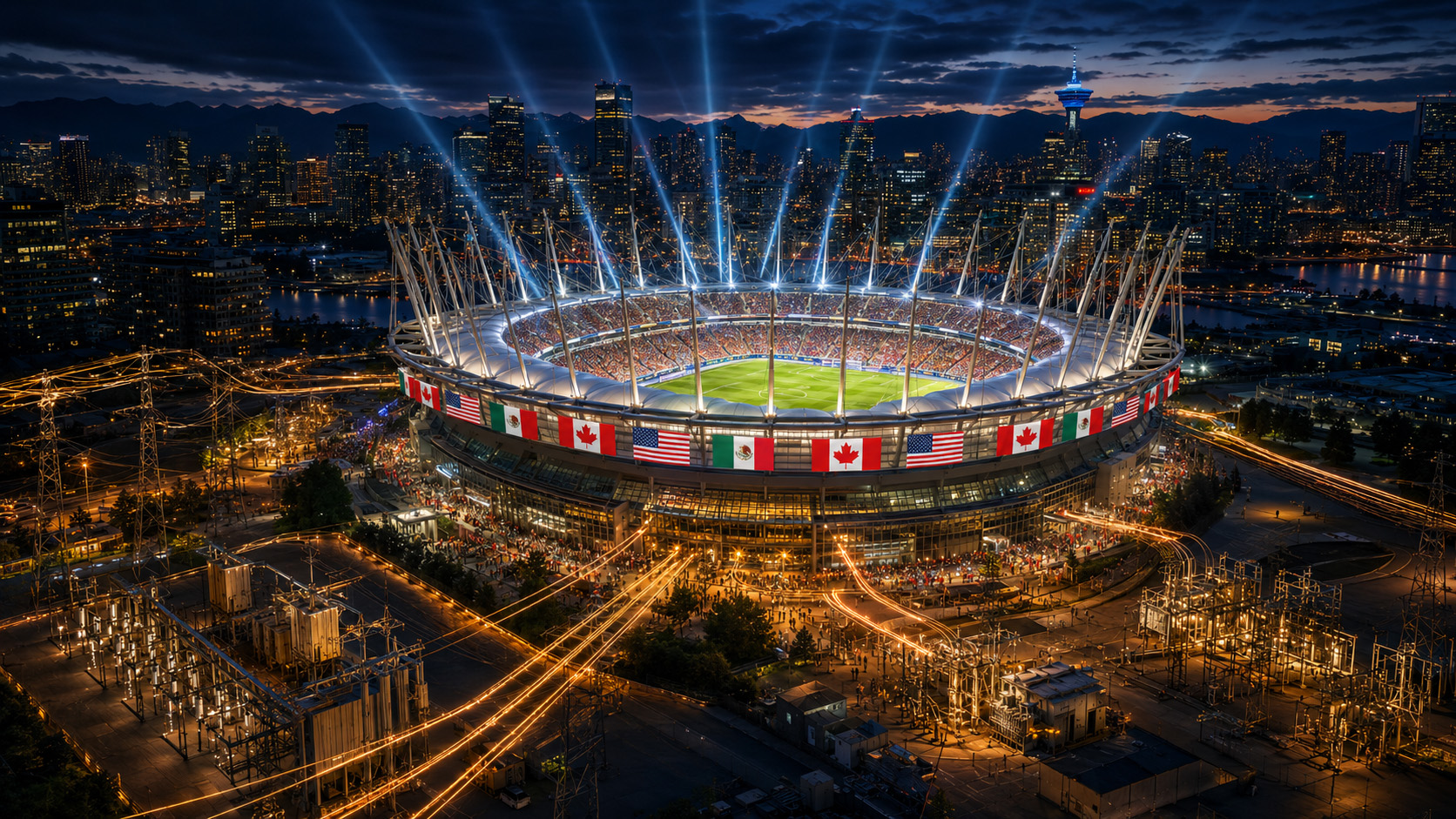
The Hidden Power Behind the World Cup: How North America Is Meeting the Electrical Demands of the World’s Biggest Sporting Event
Every four years, the FIFA World Cup captures the attention of billions of people around the globe. In 2026, the tournament made history by becoming the first World Cup to be hosted by three nations—Canada, the United States, and Mexico—and the largest edition ever staged, featuring 48 teams and matches spread across 16 host cities.

While fans focus on the action on the pitch, there is another critical element working behind the scenes that receives far less attention: electricity. From stadium lighting and broadcasting systems to telecommunications networks and fan festivals, the World Cup places enormous demands on electrical infrastructure. Yet, unlike many people assume, the tournament doesn’t require entire cities to build new power plants or dramatically expand their grids. Instead, it demands something arguably more challenging—exceptional reliability, resilience, and meticulous planning.
A Mega Event with Mega Power Requirements
North America’s electrical infrastructure is among the most robust in the world, but hosting the World Cup still creates significant temporary increases in localized electricity demand.
On any given match day, power is needed for:
- High-intensity LED stadium lighting
- Massive video boards and digital displays
- Security screening systems
- Heating, ventilation, and air conditioning (HVAC)
- Food and beverage operations
- Broadcast and media facilities
- Telecommunications infrastructure
- Transportation systems
- Temporary fan zones and entertainment venues
The challenge isn’t necessarily generating enough electricity. The challenge is ensuring that every system performs flawlessly when the eyes of the world are watching.
A momentary outage during a World Cup match could disrupt international broadcasts, create public safety concerns, damage the reputation of a host city, and result in significant financial losses. As a result, power reliability becomes mission-critical.
The Stadium Is Just the Beginning
Modern sports venues operate more like small cities than traditional stadiums. During a World Cup match, tens of thousands of spectators rely on countless electrical systems operating simultaneously. Stadiums require sophisticated electrical distribution systems with multiple layers of redundancy, backup power generation, and uninterruptible power supplies (UPS) to ensure operations continue seamlessly.
Temporary electrical infrastructure is often installed specifically for major sporting events, including:
- Additional switchgear
- Backup generators
- Portable transformers
- Temporary distribution equipment
- Supplemental UPS systems
- Redundant utility feeders
This approach is remarkably similar to the reliability strategies used in hospitals, data centres, and industrial facilities where downtime simply cannot occur.
The Hidden Load: Fan Festivals
One of the biggest electrical demands during the World Cup often occurs outside the stadium itself. Host cities establish large fan festivals where supporters can gather to watch matches on giant screens, attend concerts, and participate in various events and activities. These fan zones effectively become temporary cities, complete with their own electrical infrastructure requirements.

A typical fan festival requires power for:
- Large LED screens
- Concert stages and sound systems
- Temporary lighting
- Vendor operations
- Security systems
- Communications equipment
- Food service facilities
- Temporary office and media spaces
Some fan festivals attract hundreds of thousands of visitors over the course of the tournament, requiring carefully planned temporary power distribution systems that rival those used on large construction projects or outdoor entertainment venues.
Telecommunications: The Power Demand Nobody Sees
Perhaps the most overlooked aspect of the World Cup’s electrical demand is telecommunications. Millions of visitors generate unprecedented amounts of mobile data traffic as they stream video, post to social media, upload photos, and communicate with friends and family around the world.
To accommodate this surge in demand, telecommunications providers often deploy:
- Temporary cell towers
- Mobile network equipment
- Additional fibre infrastructure
- Small-cell installations
- Portable communications systems
Each piece of equipment requires reliable electrical service and backup power capabilities.
As our world becomes increasingly digital, communications infrastructure has become just as critical to major events as the stadium itself.
How Host Cities Have Prepared
Vancouver, British Columbia
As one of Canada’s host cities, Vancouver has undertaken significant planning to ensure electrical reliability throughout the tournament.
BC Hydro anticipated increased electricity demand resulting from:
- Higher commercial activity
- Hotels operating at or near capacity
- Fan festivals and public viewing events
- Increased transportation activity
- Elevated air-conditioning demand during summer conditions
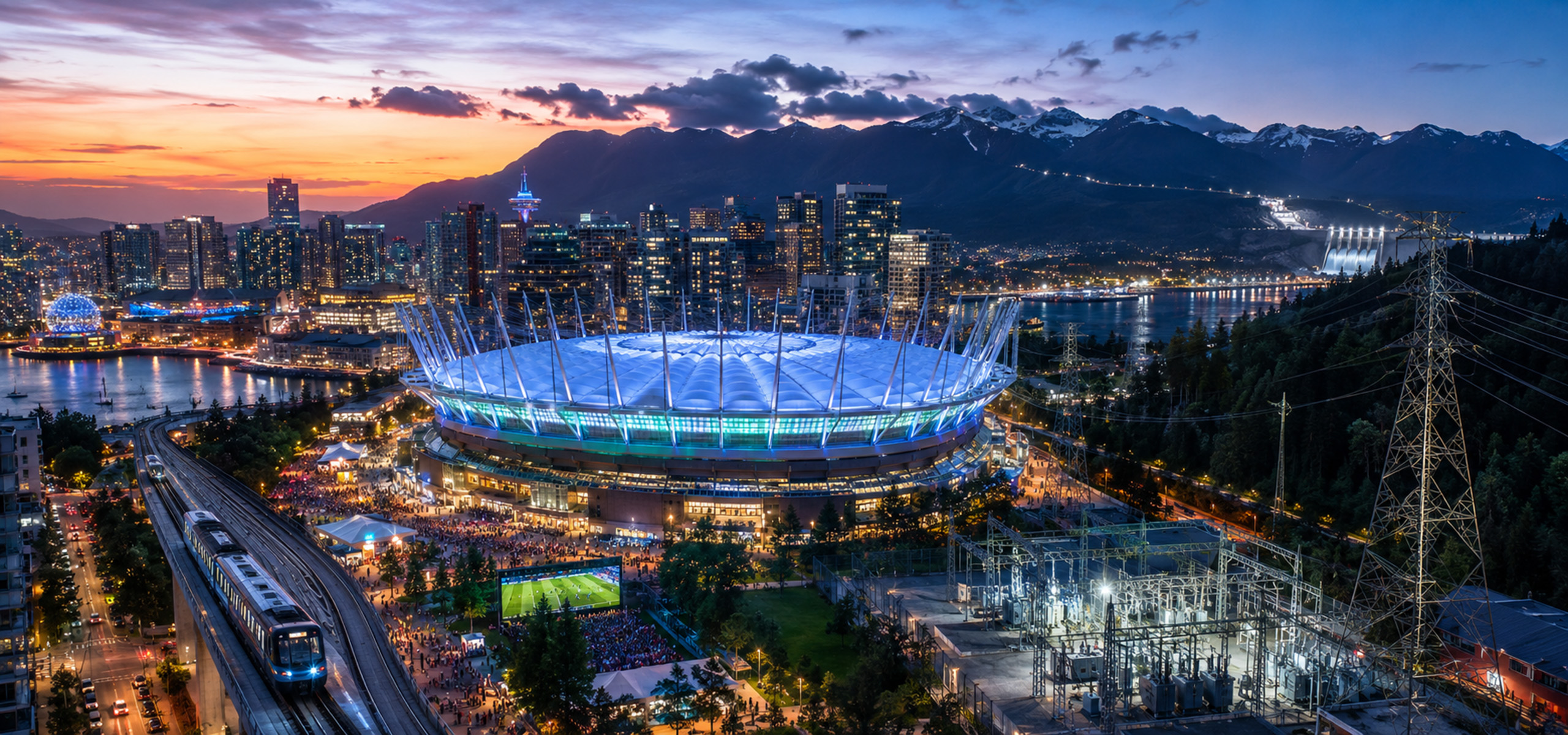
The utility confirmed that it had sufficient generating capacity and operational readiness to meet anticipated demand, demonstrating the importance of advanced forecasting and contingency planning. Vancouver also benefits from one of the world’s cleanest electricity grids, powered primarily by hydroelectric generation and supported by a robust transmission network.
Toronto, Ontario
Toronto’s preparations focused heavily on infrastructure improvements and modernization efforts.
Stadium upgrades included:
- New video displays
- Enhanced lighting systems
- Improved audio systems
- Expanded hospitality areas
- Increased spectator capacity
Behind the scenes, utility providers and municipal agencies coordinated extensively to ensure adequate redundancy, emergency response capabilities, and communications resilience.
United States Host Cities
Cities such as Dallas, Houston, Miami, Seattle, Atlanta, Los Angeles, and Kansas City have also implemented comprehensive power planning strategies.
Preparations have included:
- Mobile generators
- Temporary substations
- Portable transformers
- Additional backup power systems
- Enhanced system monitoring
- Increased utility staffing levels
- Pre-positioned emergency response crews
This level of preparation is similar to how utilities respond to major heat waves, hurricanes, or other large-scale events where reliability is paramount.
Reliability Matters More Than Megawatts
Perhaps the biggest lesson from the World Cup is that the event isn’t necessarily about producing more electricity. It’s about ensuring resilience. Modern society depends on electricity more than ever before. Large sporting events now rely on sophisticated digital technologies, extensive broadcasting systems, electrified transportation, advanced security measures, and highly connected communications networks.
As a result, host cities must prioritize:
- Redundant utility feeds
- Backup generation
- Temporary power systems
- Real-time monitoring
- Emergency planning
- Rapid response capabilities
The World Cup demonstrates that resilient infrastructure is every bit as important as generating capacity.
What the Tournament Means for the Power Industry
For companies involved in electrical infrastructure, the World Cup provides a real-world example of how critical resilient power systems have become.
The technologies and solutions used to support mega-events closely mirror those being deployed across industries such as:
- Data centres
- Manufacturing facilities
- Transportation systems
- Renewable energy projects
- Water and wastewater facilities
- Critical infrastructure applications
As the world becomes more electrified and digitally connected, expectations around power reliability continue to rise.
The World Cup illustrates an important reality for the electrical industry. The future isn’t simply about delivering more megawatts. It’s about delivering power that is reliable, resilient, and capable of supporting increasingly complex and interconnected systems.
The Unsung Hero of the World Cup
When fans remember the 2026 FIFA World Cup, they’ll remember the goals, the celebrations, and the unforgettable moments on the field. What they likely won’t remember is that every replay, every stadium light, every mobile phone upload, every security system, and every giant screen depended on one thing working perfectly in the background: A resilient electrical infrastructure.

The World Cup may be decided on the pitch, but behind every successful match is an enormous network of electrical equipment and power professionals ensuring the show never stops. As global events continue to grow in scale and technological sophistication, the importance of reliable power systems will only continue to increase.